Bringing Peanut to Life: Returning a Meiji-Era Ceramic Figure to Its World
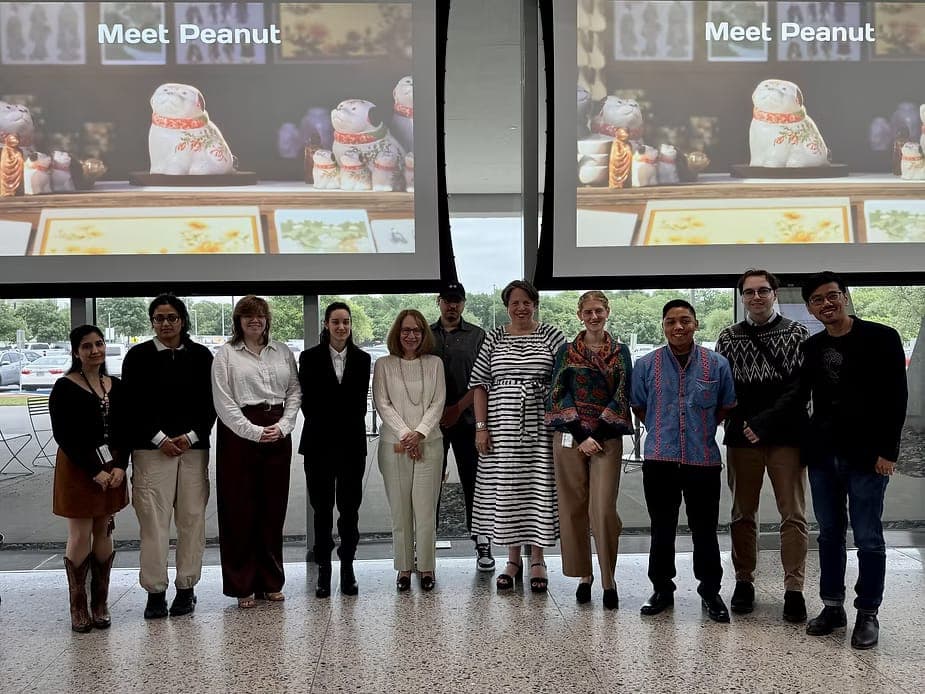
Research, concept art, texturing, and lighting · 2026 · In collaboration with the Crow Museum of Asian Art at The University of Texas at Dallas
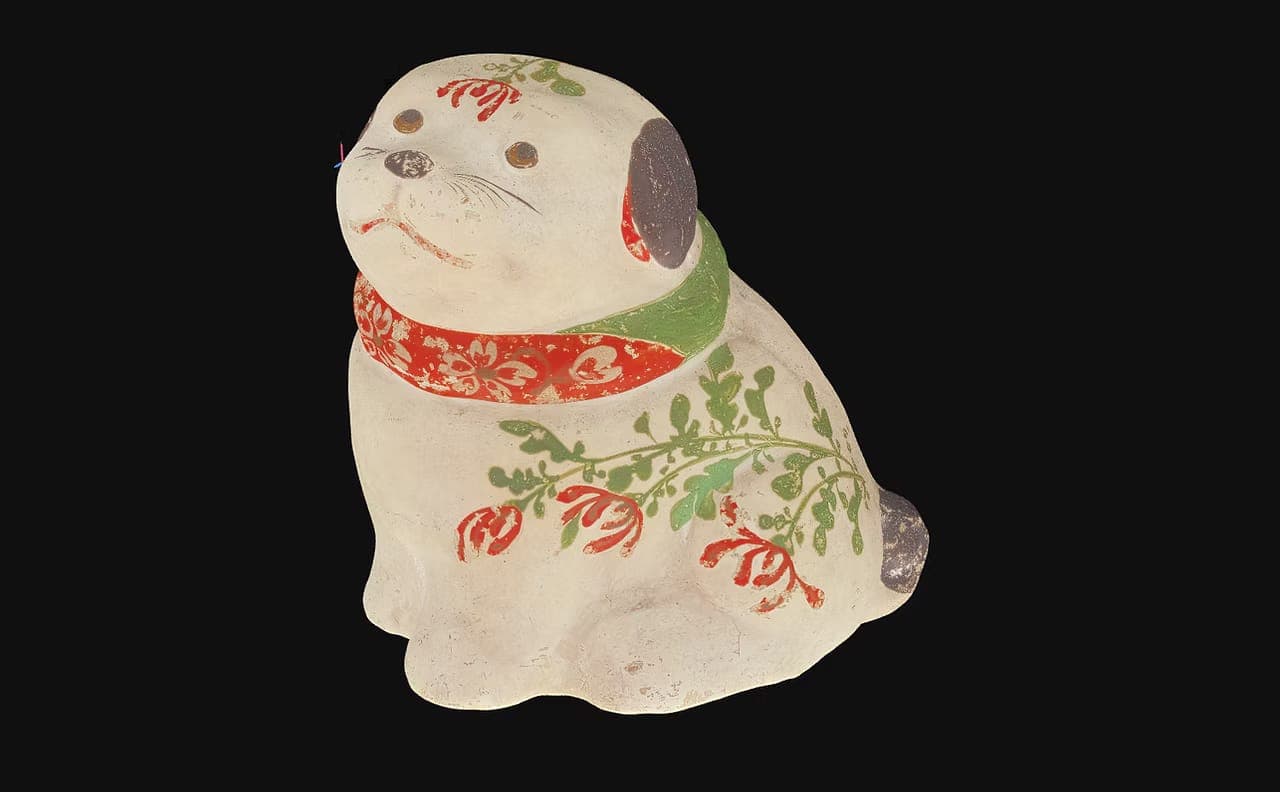
In a museum, an object is usually seen alone. It sits in a case, cut off from the people who made it, the people who bought it, and the places where it was used. Peanut is a small ceramic puppy from Meiji-era Japan, a folk object of the kind later valued by Japan's mingei (folk craft) movement. In this project, a team of seven artists worked with the Crow Museum of Asian Art to digitize, reconstruct, and animate the figure in a 45-second short film. My part was the historical research behind the film's visual world: I designed the character's costumes, built the main environments as matte paintings, and developed the lighting in 2D before it moved into 3D. I also worked on texturing.
The question behind my part of the work was this:
Can historical research help an animated film give a museum object back its context, so that viewers understand not only what the object looks like, but how it lived in its own time?
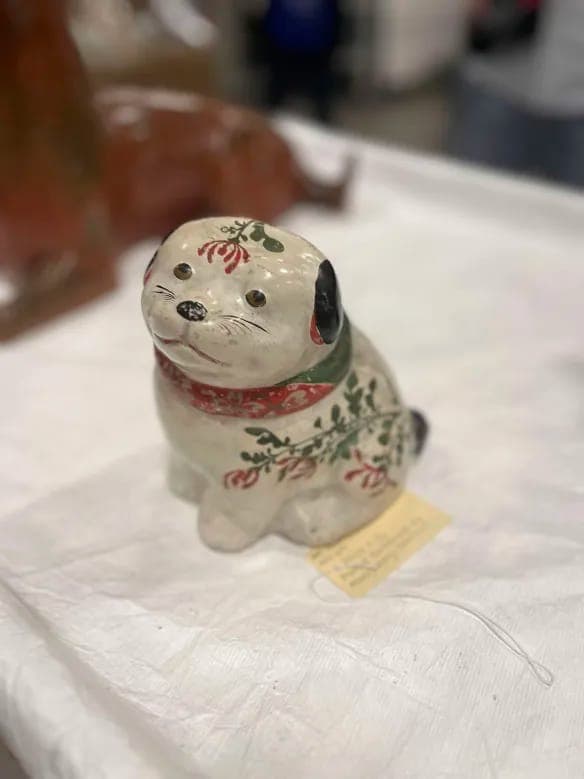
The object and the problem
Peanut is easy to love and hard to read. On its own, it tells a viewer very little about who made it, who owned it, or what it meant to them. Even its label needs care. The mingei movement was named in the 1920s, after the Meiji period had ended, so calling a Meiji object "mingei" already involves a later way of looking at it. From the start, the project asked us to think about the difference between the object itself and the ideas that have gathered around it.
Our task was not only to make Peanut move. It was to build a believable world around it, in which the object's history could be seen.
Three kinds of evidence
My research drew on three kinds of evidence, and each one shaped the film in a different way.
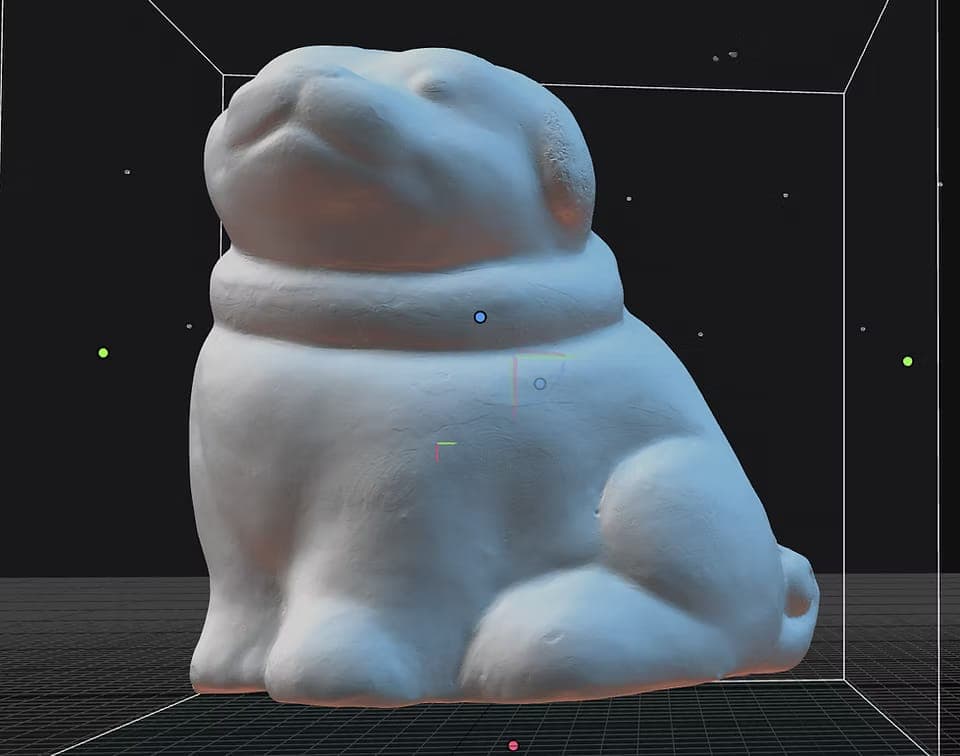
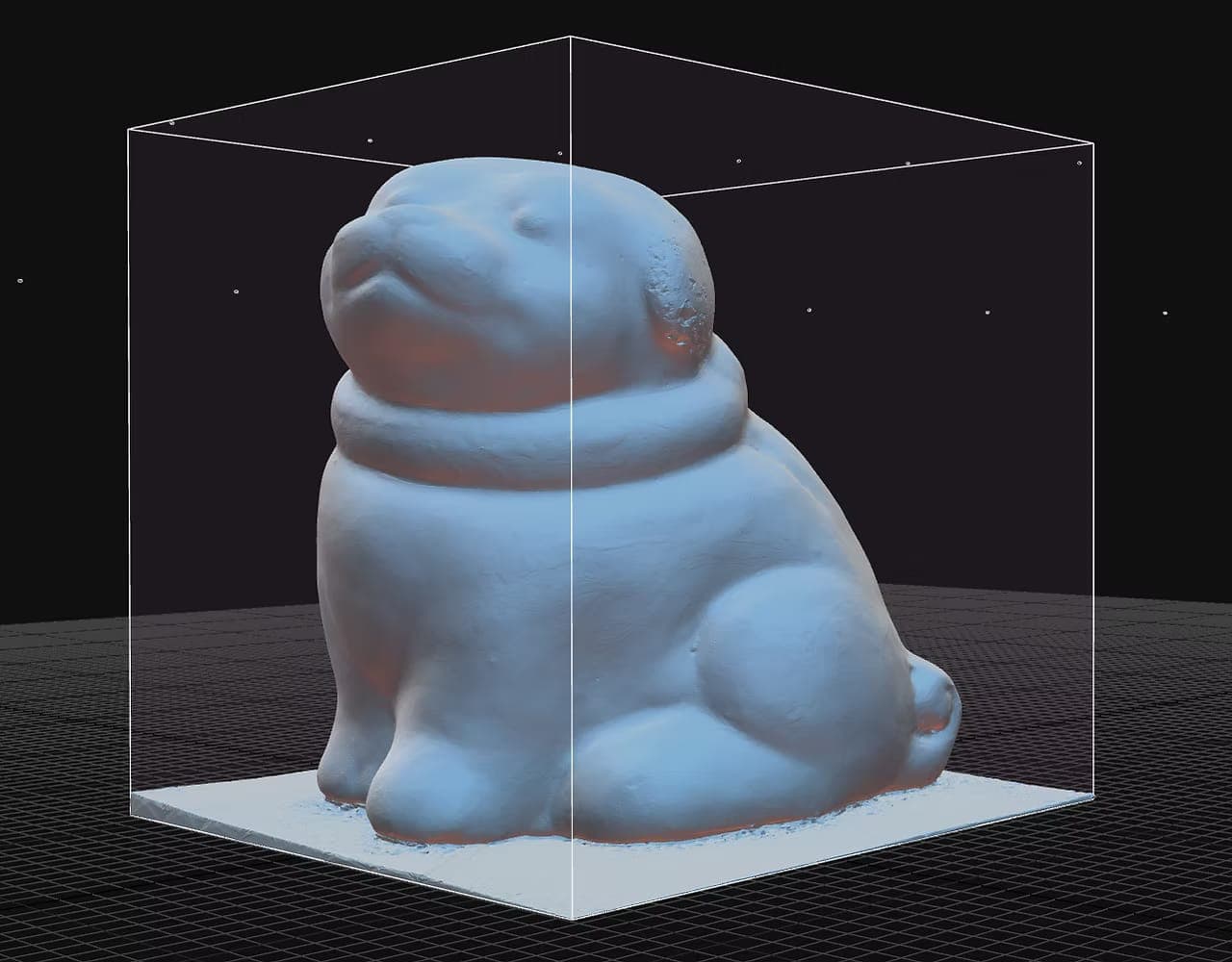
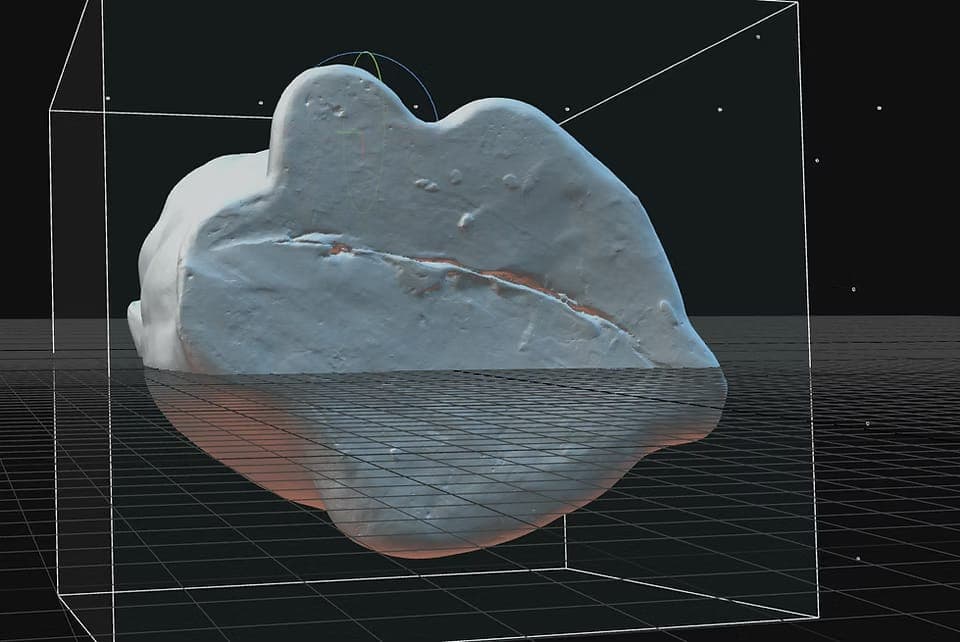
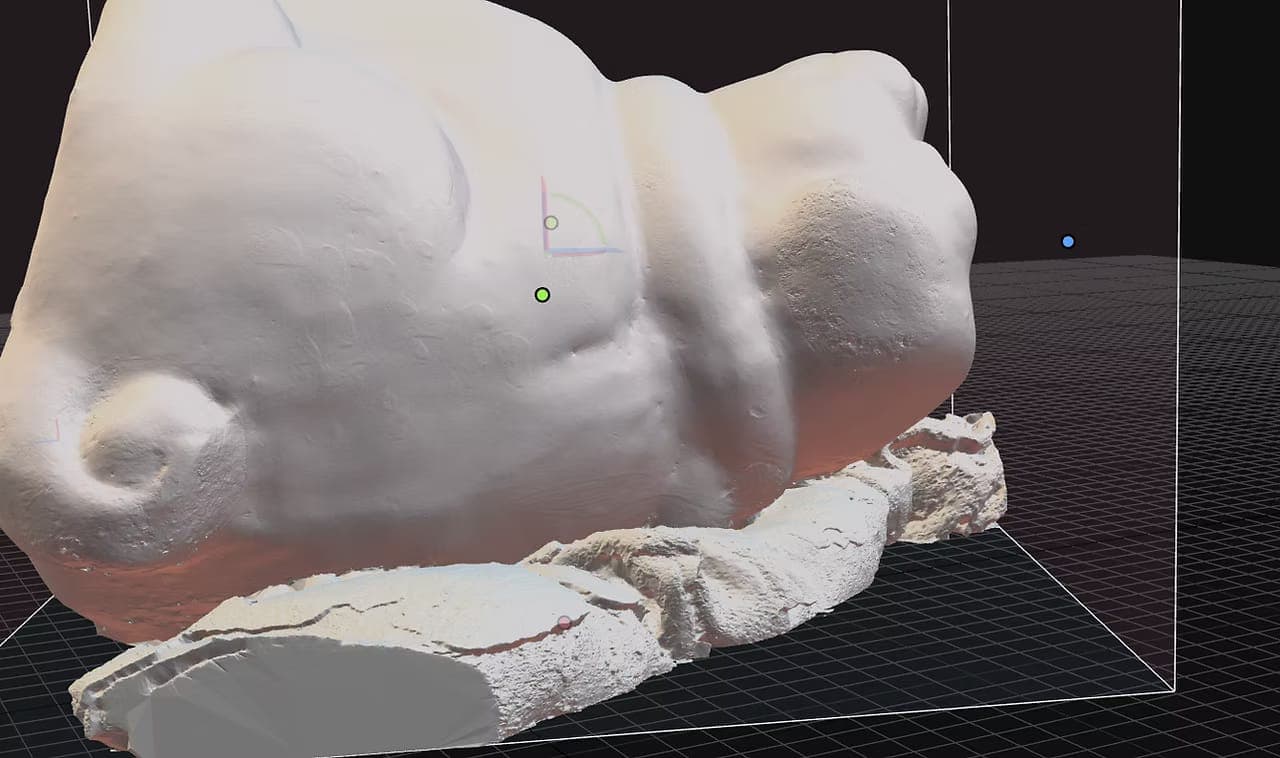
The object. As a team, we photographed Peanut from every angle and used photogrammetry to turn those photographs into an accurate 3D model. This was close looking in a very literal sense. Every surface, curve, and painted mark had to be recorded before it could be reconstructed. The process also produced a digital record of the artifact, which has value beyond the film itself.
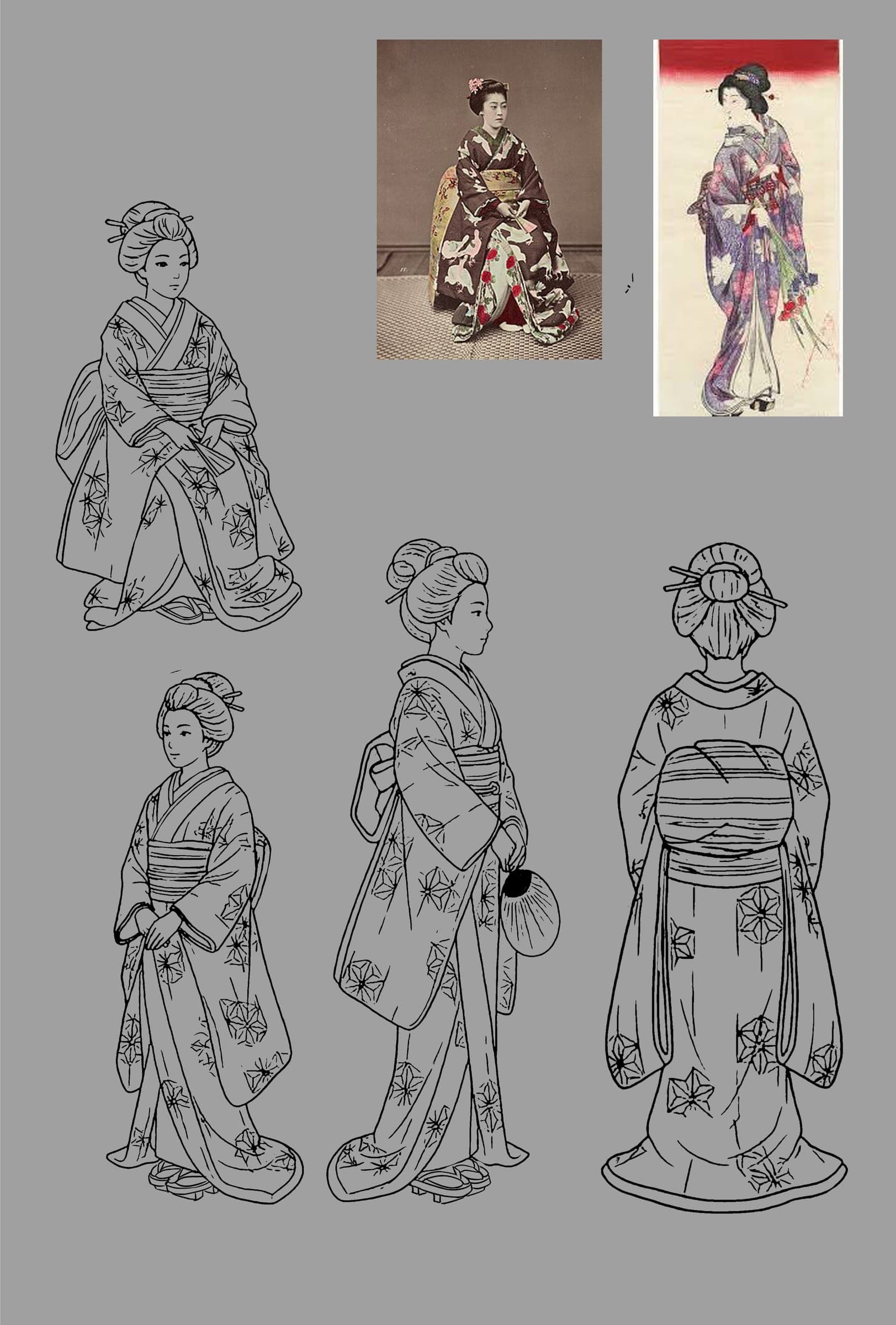
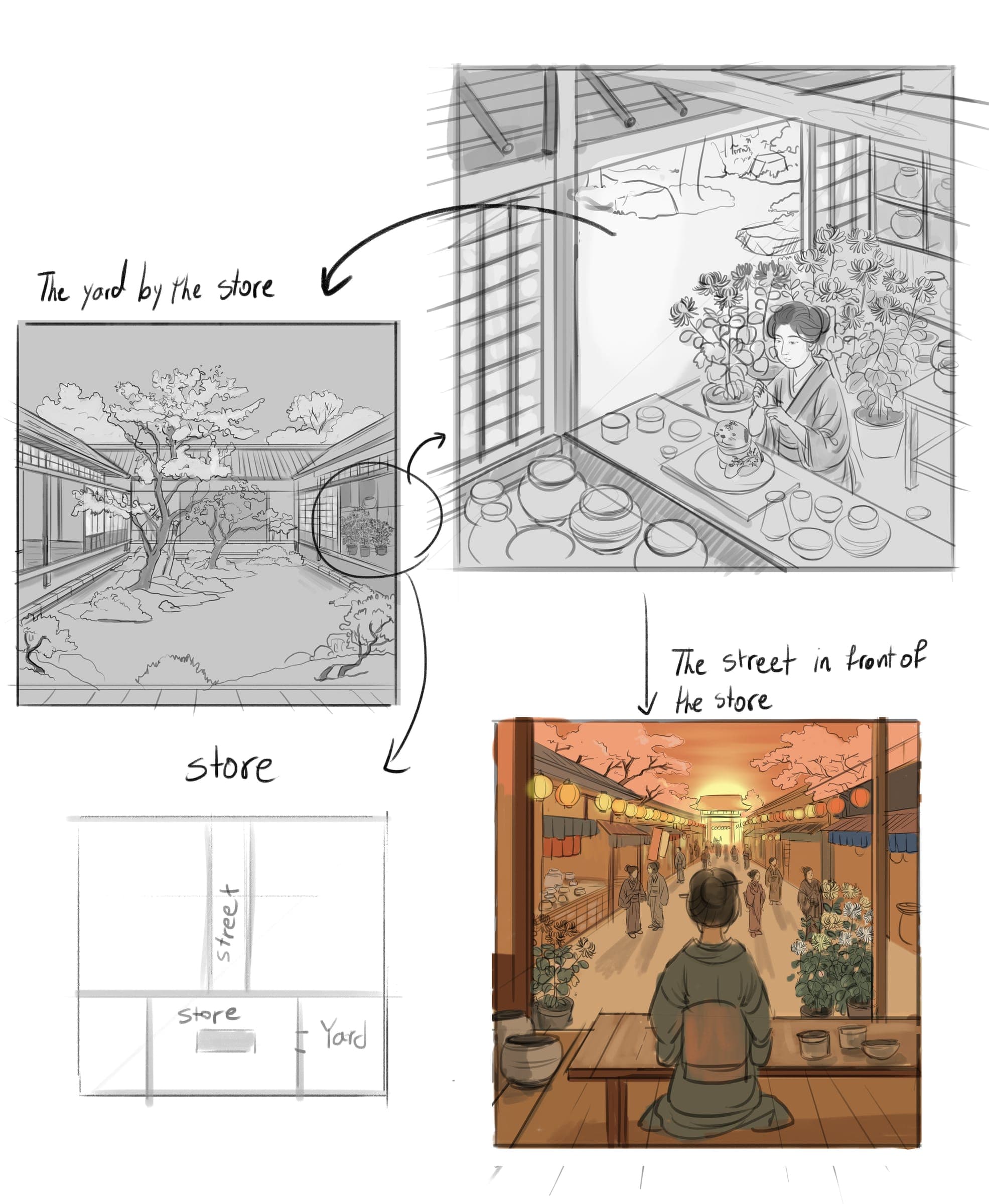
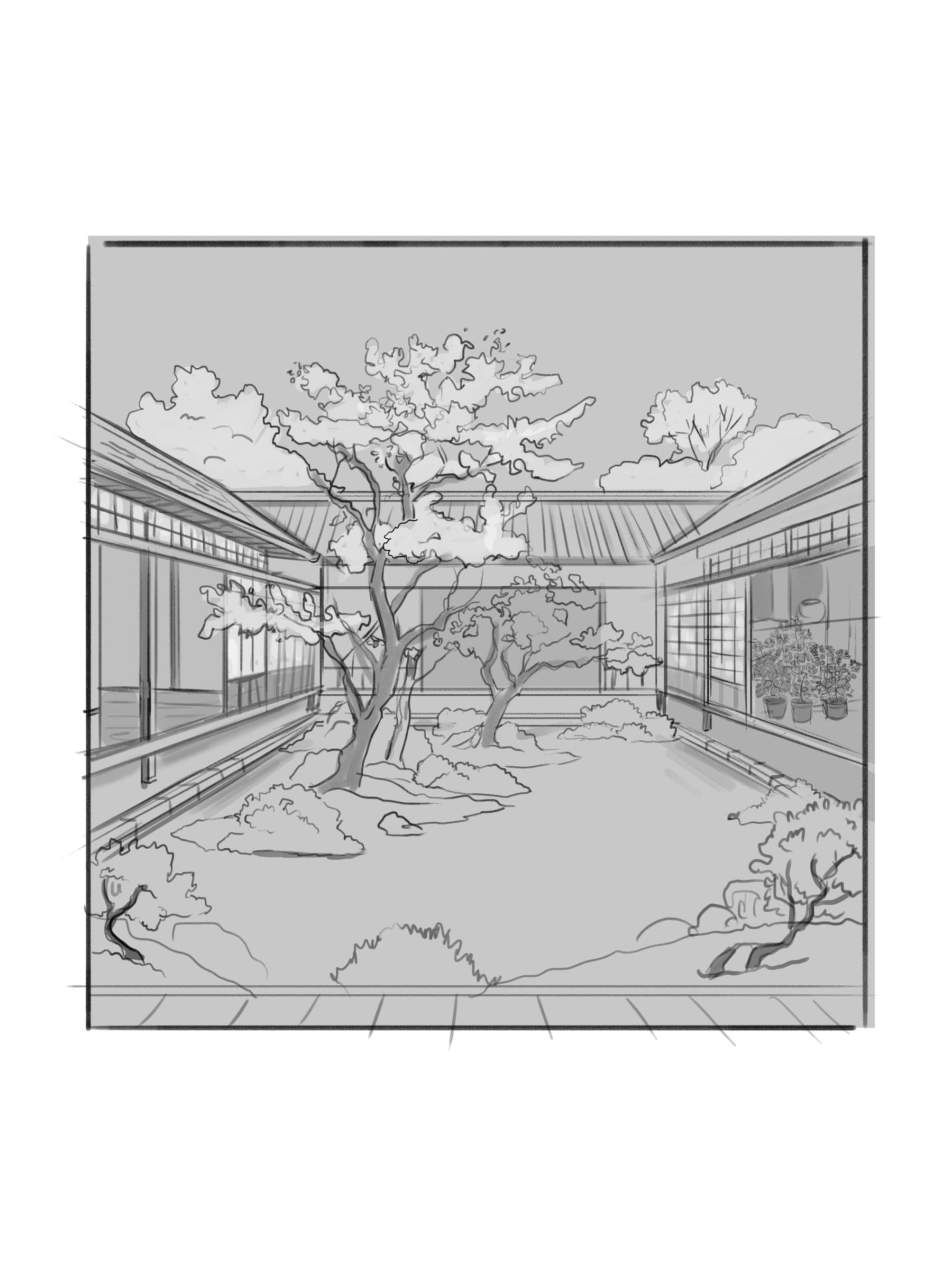
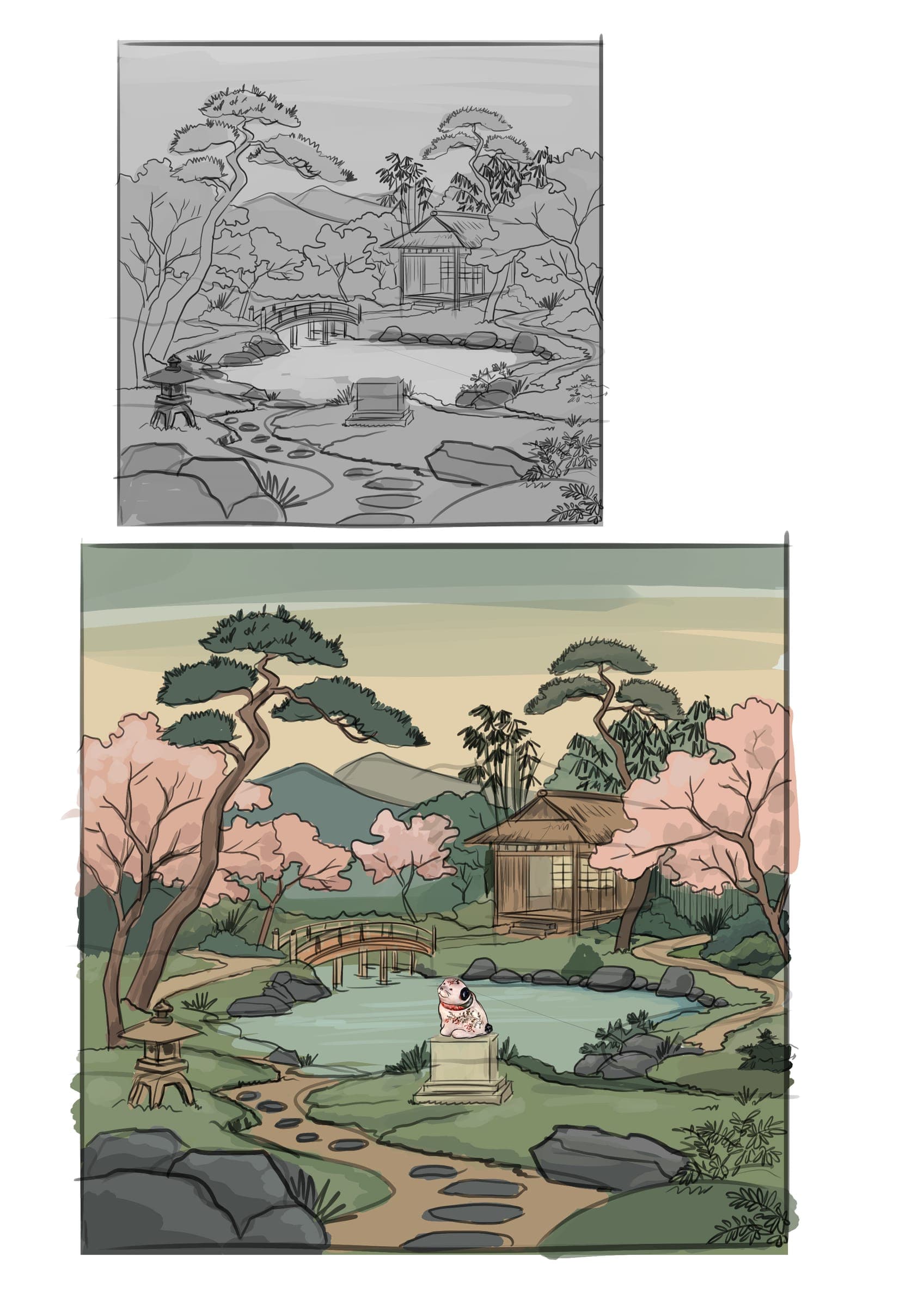
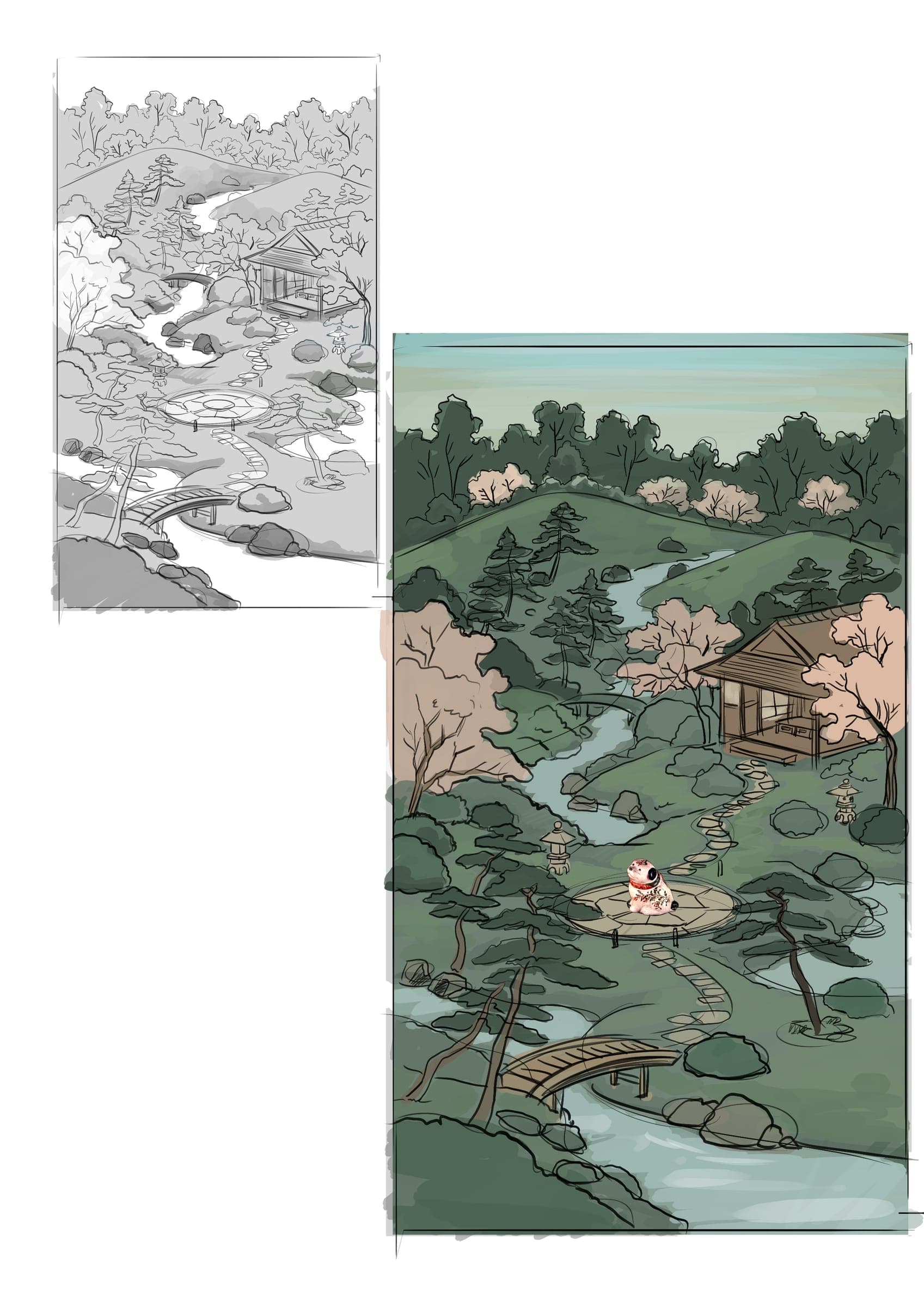
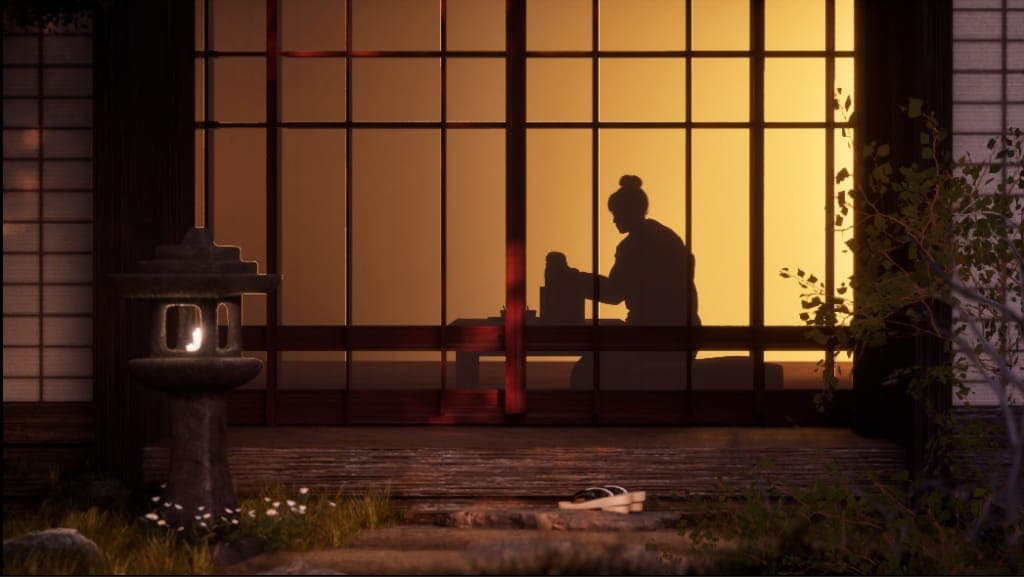
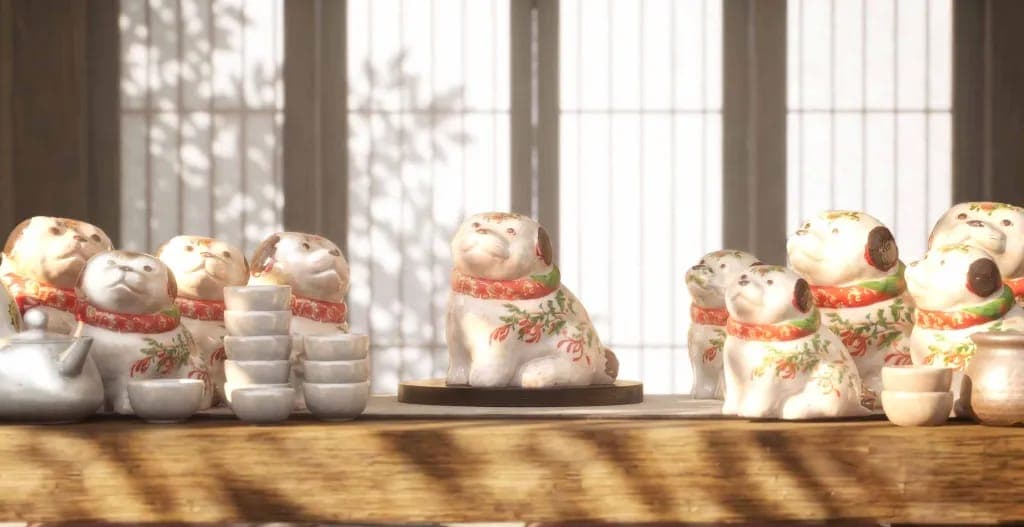
Period images. To design the human character and the spaces of the film, I gathered visual references from the Meiji period. Written and photographic sources on everyday dress and ordinary spaces were limited, so I relied mostly on Meiji-era paintings. I studied clothing, interiors, and street life in these images and used them to design the character's costumes and to build the artist's workshop and the market as matte paintings. I also designed a decorative motif based on the spider chrysanthemum, which appears on the walls and partitions of the set and on Peanut itself, so that the object and its world share one visual language.
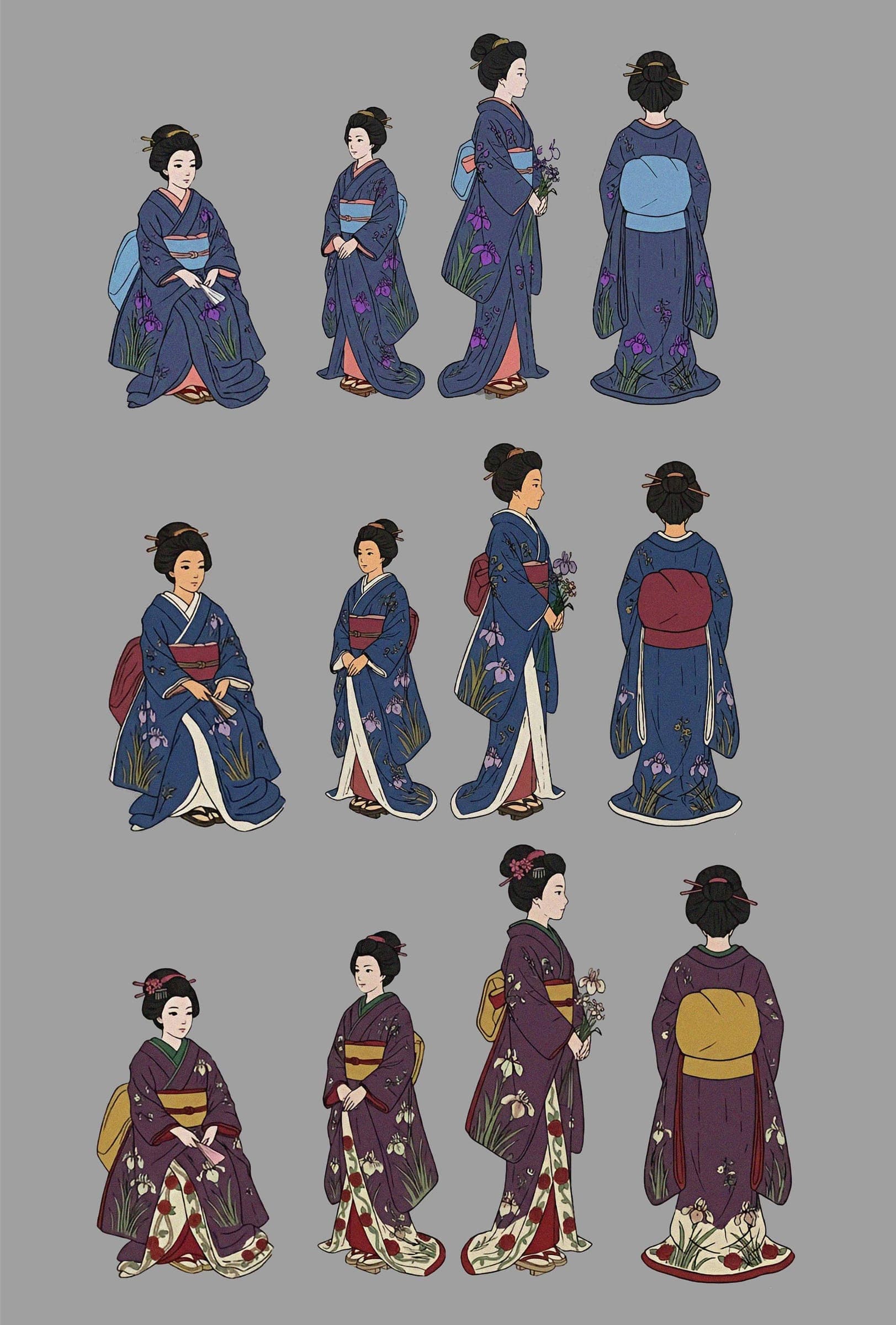
Curatorial knowledge. The museum reviewed our work at every stage. Their comments acted as a second layer of research: they tested our visual choices against expert knowledge of the period.
When research changes the image
The most useful moments in the project came when the evidence showed us that a choice was wrong.
Early on, we placed a folding screen in the outdoor market. It suited the period visually, but not the way the space was used. The museum pointed out that screens belonged to interiors and homes, and that an open market would have used fabric partitions. An element can look right for a period and still be wrong for a particular place, and only the evidence can tell the difference.
In the same way, we enlarged a stone lantern to match Meiji-era proportions. We also changed the market's lighting from a foggy, dramatic early morning to warm, ordinary daylight, so that it read as an everyday public place.
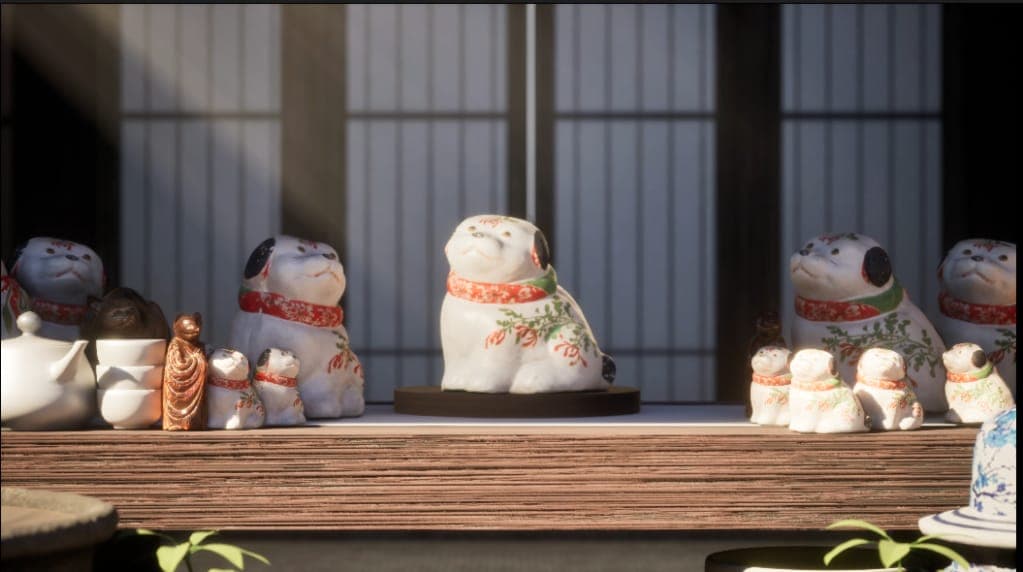
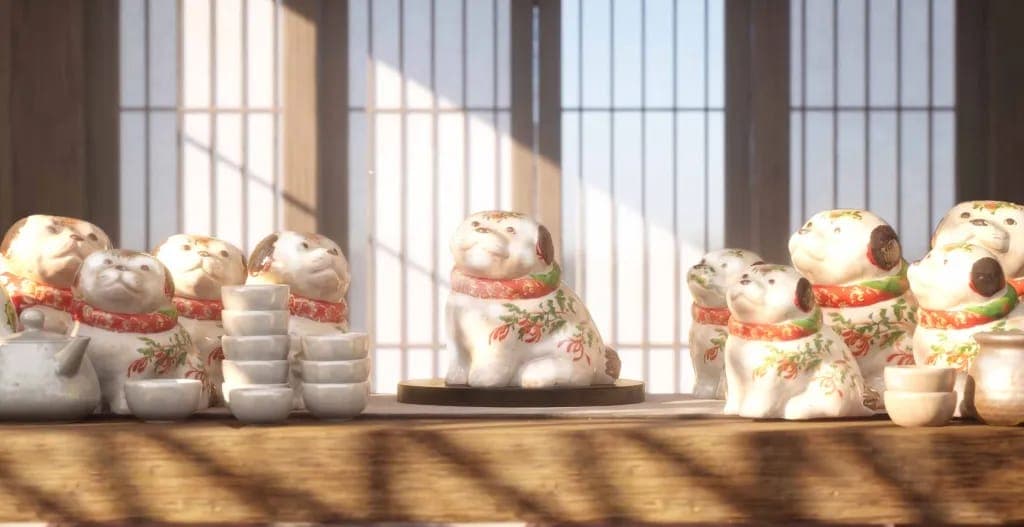
The most important change was about meaning. The museum wanted the film to show that Peanut was an everyday object, made for ordinary people and not only for the elite. To make that idea visible, we added a market scene in which Peanut sits among many other ceramic animals for sale. A single shot of a market stall said more about the object's place in society than any close-up could.
These changes taught me that representing a historical period is not a matter of adding more period detail. It depends on choosing the right details, the ones that carry meaning about how people lived and used things.
Lighting as a research tool
I developed the film's lighting in 2D before it moved into 3D. In Photoshop, I could test mood, color, and time of day much faster than in Unreal Engine, and compare several versions of each shot side by side. These studies became the shared reference for the 3D lighting stage. They also worked as a way of asking questions: what time of day is this scene, what kind of place is this, and how should a viewer feel in it? In a historical film, light is part of the argument about the world being shown.
Working process
After the photography and digitization stage, we divided the production into clear roles and worked in short sprints using Scrum, with tasks tracked on a shared Miro board and regular online meetings. At the end of each sprint, the museum reviewed our progress as our client. This rhythm of making, review, and revision kept the research connected to the production from beginning to end. It also gave me experience in carrying historical research through a full professional pipeline, from documentation to final film.
Outcome
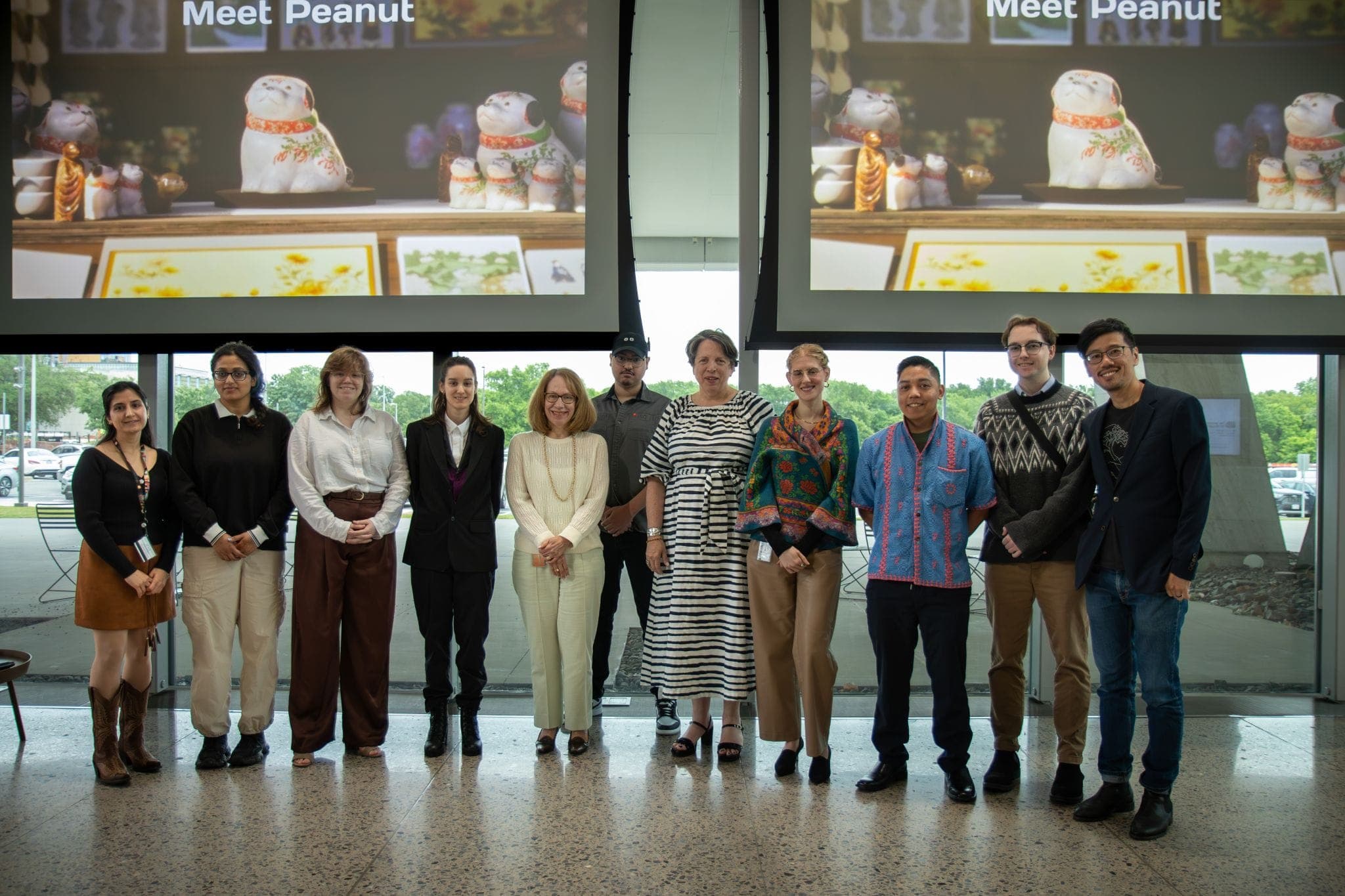
We presented the film, the digitized artifact, and our research process at the Crow Museum of Asian Art. The museum responded with real enthusiasm, and the film has since been submitted to the Asian Film Festival.
What this project taught me
Working on Peanut changed how I think about museum objects and moving images. An object's meaning lives not only in its form, but in its use, its makers and owners, and the spaces it moved through. A museum case cannot show those things. Animation can, but only if every visual choice is grounded in evidence. In this project, research decided what the film could honestly say about the object.
This is the question I keep returning to in my work: how historical images and objects carry cultural memory, and how contemporary media such as animation and digital reconstruction can make that memory visible again without losing what makes it historical.
Selected sources
- Brandt, Kim. Kingdom of Beauty: Mingei and the Politics of Folk Art in Imperial Japan. Duke University Press, 2007.
- Kikuchi, Yuko. Japanese Modernisation and Mingei Theory: Cultural Nationalism and Oriental Orientalism. RoutledgeCurzon, 2004.
- Yanagi, Sōetsu. The Unknown Craftsman: A Japanese Insight into Beauty. Adapted by Bernard Leach, Kodansha International, 1972.